
08
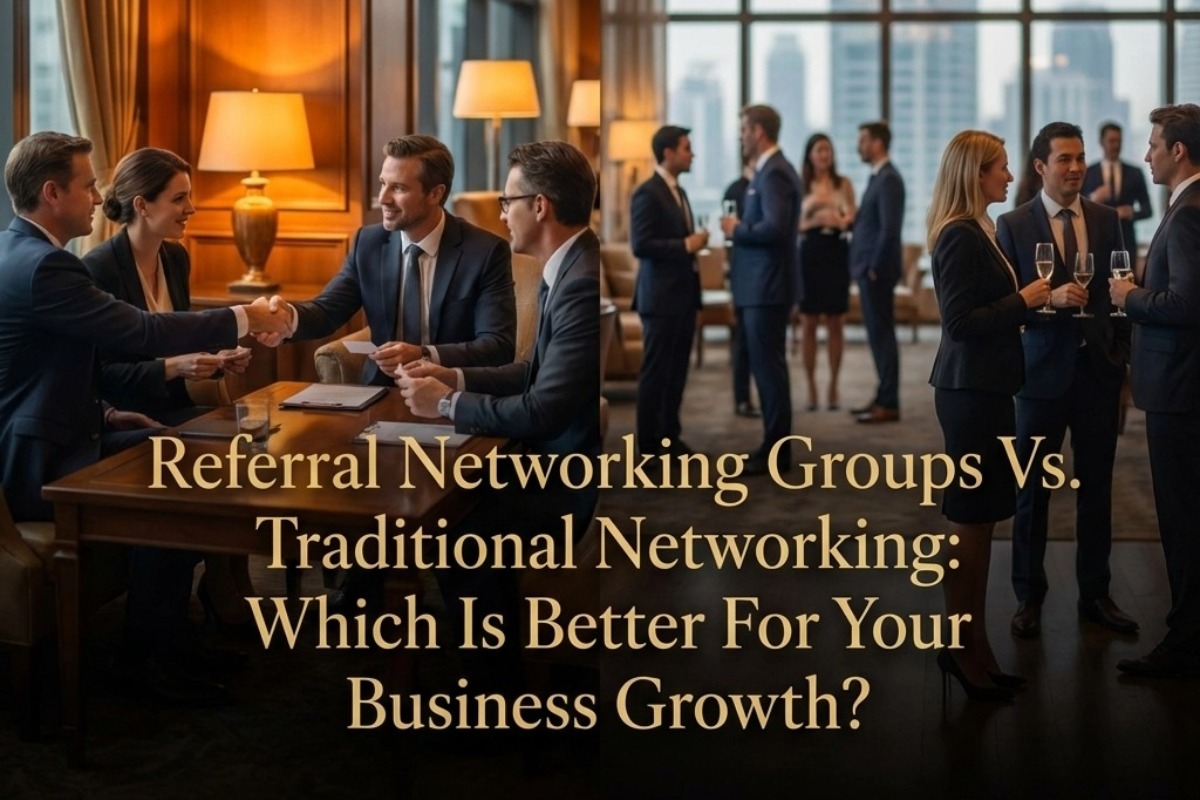
JanReferral Networking Groups Vs. Traditional Networking: Which Is Better For Your Business Growth?
Did you know that businesses using referral networking groups report 3x growth in their customer base within just 2-3 years? That's a pretty compelling statistic when you're trying to decide where to invest your precious networking time.
You've probably been to both types of events. The traditional networking mixer where you collect a stack of business cards and hope something sticks. And maybe you've heard about those more intimate referral groups where the same people meet regularly to actually help each other grow.
So which approach actually works better for your business? Let's break it down.
What's Traditional Networking Really About?
Traditional networking is what most people picture when they think "networking event." You show up to a chamber mixer, cocktail hour, or conference reception. You meet as many people as possible, exchange business cards, and hope to make some connections that turn into business.
The focus is on quantity. Meet 20 people tonight, collect those cards, follow up with everyone, and see what happens.
You've been there, right? Standing in a crowded room with a name tag, trying to have meaningful conversations over background noise while balancing a drink and a plate of appetizers. The interactions are often surface-level because you're trying to cover as much ground as possible.
Traditional networking events are great for:
- Getting your name out there quickly
- Learning about different industries and businesses in your area
- Building general awareness of your services
- Meeting potential vendors or partners outside your industry
How Referral Networking Groups Work Differently
Most groups have structured systems for tracking referrals. Members give each other "referral slips" documenting the business they've passed along. There's accountability built right in.
Did you know some groups even require members to bring a certain number of referrals each month? That level of commitment creates a completely different dynamic than hoping to bump into someone useful at a cocktail hour.
Why Referral Groups Often Win for Business Growth
Let's get real about what actually drives business growth. It's not the number of business cards you collect. It's the quality of relationships you build and the trust you establish.
Quality Over Quantity Every Time
When someone refers you through a referral group, they're putting their reputation on the line. They know your work, they trust your character, and they're confident you'll take care of their contact.
Compare that to a random introduction from someone you met once at a mixer. The referral quality is completely different.
Your referral group members become your sales force. They understand what makes a good prospect for you, they know how to talk about your services, and they actively look for opportunities to help you grow.
The Accountability Factor Changes Everything
In traditional networking, there's no real system for following through. You exchange cards, maybe connect on LinkedIn, and then... nothing. No one's tracking whether you actually help each other.
Referral groups create accountability that drives results. Members know their referral activity is being tracked. They see who's contributing and who's just taking. This creates a natural motivation to stay active and helpful.
Long-Term Relationships Beat One-Off Connections
Think about your best business relationships right now. Weren't most of them built over time through multiple interactions and growing trust?
Referral groups give you that time. You're meeting with the same professionals for months or years. You learn about their families, their business challenges, their goals. These become genuine business friendships that generate referrals naturally.
Traditional networking rarely gives you enough time to build that depth. You might see someone multiple times at different events, but the interactions stay surface-level.
The Numbers Don't Lie
Here's what really matters—the results. Businesses that commit to referral networking consistently report better outcomes than those focused on traditional networking alone.
Some referral group members see their customer base triple within 2-3 years. Others report that referral-based customers have higher lifetime value and better retention rates.
Why? Because referred customers come in with higher trust levels. They're pre-qualified by someone they respect. They're more likely to buy, less likely to haggle on price, and more likely to refer others themselves.
When Traditional Networking Still Makes Sense
Let's be fair here. Traditional networking isn't completely worthless. It definitely has its place in your overall business development strategy.
Traditional networking works well when you're:
- New to an area and want to quickly learn about the local business community
- Looking for vendors or service providers for your own business
- Trying to establish yourself in a new industry
- Building general brand awareness
The key is understanding what traditional networking can and can't do. It's great for planting seeds and making initial connections. It's not great for generating qualified referrals on a consistent basis.
Making Your Choice: What Works for Your Business?
So which approach should you choose? Honestly, you don't have to pick just one.
Many successful business owners use traditional networking to meet potential referral partners, then invite the best connections to join their referral group or tribe.
But if you had to prioritize one approach, referral networking typically delivers better ROI for most service-based businesses. The time investment is more focused, the relationships are deeper, and the results are more predictable.
Building Your Business Tribe
The most successful professionals understand that business growth happens through relationships, not transactions. They focus on building what we call a "business tribe"—a core group of professionals who know, like, trust, and actively refer each other.
Your tribe becomes your extended sales team. They're out there talking about your business, looking for opportunities to help you, and sending you their best contacts.
Traditional networking might help you meet potential tribe members, but referral groups are where those relationships really develop and produce results.
At LeadTribes, we've seen how powerful this approach can be. When business owners commit to building genuine relationships within a structured referral system, their growth accelerates dramatically.
Ready to Level Up Your Networking Strategy?
Here's the bottom line: if you're serious about growing your business through networking, you need a strategy that prioritizes relationship depth over contact quantity.
Traditional networking has its place, but referral groups deliver the consistent, high-quality leads that actually move your business forward.
The question isn't whether networking works—it's whether you're networking in a way that maximizes your time investment and generates real business results.
Want to experience the difference? Join LeadTribes and see how the right networking community can accelerate your business growth. Your future referral partners are waiting to meet you.



11.png?v=1)
2.png?v=1)
4.png?v=1)
